Why people choose orthodontic treatment
Orthodontics moves teeth into better positions, gradually and under control. Patients come to us for crowded or crooked teeth, gaps, protruding front teeth, and bites where the upper and lower teeth do not meet properly. Straighter teeth are easier to clean, and a balanced bite reduces uneven wear and strain on the jaw.
Braces and aligner options
Fixed metal braces
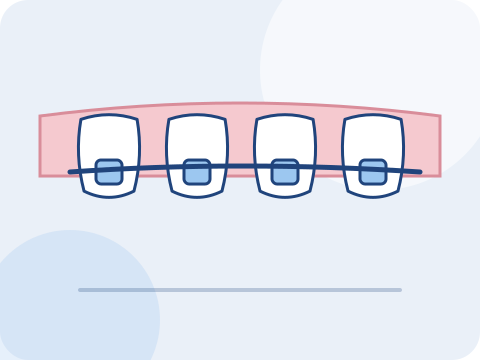
Small brackets are bonded to the teeth and joined by a wire that is adjusted over time. Metal braces are reliable for a wide range of cases, including complex crowding and bite problems.
Tooth-coloured (ceramic) braces
These work in the same way as metal braces but use clear or tooth-coloured brackets, so they are much less noticeable. They are popular with adults and older teenagers.
Clear aligners
A series of removable, transparent trays gently moves the teeth. Aligners suit selected cases and must be worn for most of the day, about 22 hours, and removed only to eat and brush.
The right option depends on how your teeth and jaws need to move, your age and your lifestyle. Your dentist will explain what is realistic for you.
What happens at your orthodontic assessment
- Examination. We check your teeth, bite and jaw, and may take X-rays, photographs and impressions or scans.
- Treatment plan. You hear which option suits you, the estimated length of treatment and the total cost before you decide.
- Fitting. Braces are fitted in one appointment, or your first aligners are given with instructions.
- Regular adjustments. Short visits, usually every four to eight weeks, to adjust the braces and check progress.
- Retention. When the teeth are in place, a retainer holds them there. Wearing it as advised is what keeps the result.
Braces for children and adults
A child’s first orthodontic check is useful around the age of seven, when problems with growth or the bite can be spotted early, even if treatment starts later. Teenagers are often treated while the jaw is still growing. Adults can have orthodontic treatment at any age as long as the teeth and gums are healthy, and many choose ceramic braces or aligners.
Living with braces
Teeth may feel tender for a few days after fitting and after adjustments. Brushing carefully around brackets is important, and hard or very sticky foods such as toffees, hard nuts and corn on the cob are best avoided. We show you how to clean around your braces at your fitting appointment.
Risks and how we manage them
Orthodontic treatment is very safe when well planned, but it needs commitment. Poor brushing around brackets can lead to white marks or decay, so cleaning well matters. Teeth can move back if retainers are not worn. Occasionally roots shorten slightly during treatment, which is one reason progress is checked regularly.
Braces price in Lahore
The cost depends on the type of braces or aligners and how long treatment will take. You receive the full cost after your assessment, before treatment begins, with the option to discuss payment over the course of treatment.
Why patients choose Lá Dental Aésthetique
- Planned around your face, not a template. Shade, shape and proportion are agreed with you before anything is changed.
- A clear plan first. You hear the options, the number of visits and the cost before treatment begins.
- Strict sterilisation. Instruments are sterilised and surfaces disinfected between every patient.
- On Jail Road, Shadman. Open Monday to Saturday, 12:00 pm to 8:00 pm, so appointments fit around work and school.
- Regular, evening-friendly adjustment appointments up to 8:00 pm.
Send us a message and the team will suggest a time that suits you.