
Specialist surgical care
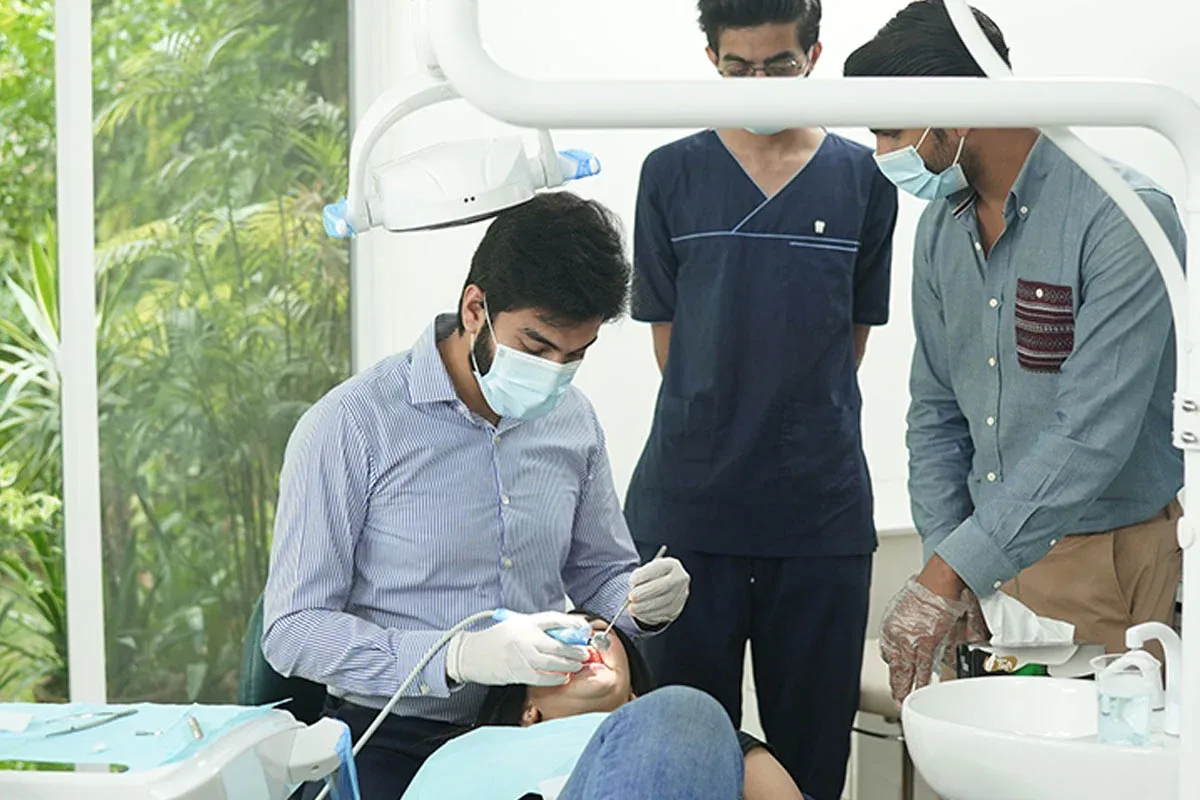
Some dental problems need a surgical approach. At Lá Dental Aésthetique, surgical care is led by Dr. Um E Rubab (BDS, FCPS (R) Oral & Maxillofacial Surgery), so treatment is planned and carried out by a surgeon trained specifically in surgery of the mouth, jaws and face.
Oral surgery treatments
- Wisdom tooth removal, including impacted wisdom teeth that are stuck under the gum or bone.
- Surgical extractions of broken, badly decayed or hard-to-reach teeth.
- Implant surgery, including assessment of the bone. See dental implants.
- Assessment of jaw, facial and oral problems, with referral for hospital care when needed.
Wisdom teeth: when they need to come out
Wisdom teeth, known in Urdu as akal daarh, usually arrive between the late teens and mid-twenties. Many cause no trouble. Removal may be advised if a wisdom tooth:
- keeps causing pain or swollen, infected gum around it,
- has decay that cannot be repaired,
- is damaging the tooth next to it, or
- is linked to a cyst or other problem seen on an X-ray.
An X-ray shows the position of the tooth and its roots, which helps the surgeon plan the safest approach.
What happens on the day of surgery
- Consultation and X-ray. We explain why surgery is or is not recommended, the risks and the expected recovery.
- Anaesthetic. The area is numbed with local anaesthetic. If you are anxious, tell us and we will discuss the options.
- The procedure. The tooth is removed, sometimes in sections, and the gum may be closed with stitches.
- Aftercare instructions. You go home with clear written instructions and a number to call.
Coronectomy: when the roots sit close to the nerve
Sometimes the X-ray shows that the roots of a lower wisdom tooth lie very close to the nerve that gives feeling to the lip and chin. In that situation the surgeon may suggest a coronectomy: the crown of the tooth is removed and the roots are deliberately left in place, where they usually heal over without trouble. This lowers the risk of nerve injury compared with taking the whole tooth out. Your surgeon explains whether a full extraction or a coronectomy is safer for you after studying your X-ray.
Risks we discuss with you
Like any surgery, oral surgery carries some risks. These include bleeding, infection and a painful “dry socket” if the blood clot is lost. With lower wisdom teeth there is a small risk of temporary, and rarely permanent, numbness of the lip or tongue because of nearby nerves. Your surgeon explains your individual risks after looking at your X-ray, so you can decide with full information.
Recovery after wisdom tooth removal
Swelling, stiffness and soreness are normal for a few days and usually peak around the second or third day. For a smooth recovery:
- bite on the gauze provided and rest on the day of surgery,
- do not smoke, and do not rinse hard or drink through a straw for the first 24 hours,
- eat soft, cool food and keep the area clean as advised,
- take pain relief as recommended.
Call the clinic if you have heavy bleeding, a fever, swelling that is getting worse after three days, or severe pain that is not settling.
Why patients choose Lá Dental Aésthetique
- Specialist surgical care. Surgery is led by Dr. Um E Rubab, BDS, FCPS (R) Oral & Maxillofacial Surgery.
- A clear plan first. You hear the options, the number of visits and the cost before treatment begins.
- Strict sterilisation. Instruments are sterilised and surfaces disinfected between every patient.
- On Jail Road, Shadman. Open Monday to Saturday, 12:00 pm to 8:00 pm, so appointments fit around work and school.
- Clear written aftercare and a number to call after surgery.
Send us a message and the team will suggest a time that suits you.